GES and TenneT conclude first Capacity Steering Contract with a congestion reliever for battery project Sequoia

Breda, April 8, 2026
GES and TenneT conclude first Capacity Steering Contract with a congestion reliever for battery project Sequoia at the Municipality of Oosterhout
Green Energy Storage (GES) and TenneT take an important step in easing grid congestion in the Netherlands. For the Sequoia battery project in the municipality of Oosterhout, GES as a congestion reliever, agrees on a Capacity Steering Contract (CSC) with TenneT in combination with a time-based transport right (TDTR).
GES hereby acts as the first congestion reliever that, in combination with a TDTR contract, concludes a CSC with TenneT. Through this collaboration, both parties demonstrate how flexibility can concretely contribute to better utilization of the existing electricity grid.
Sequoia as a concrete solution for grid congestion.
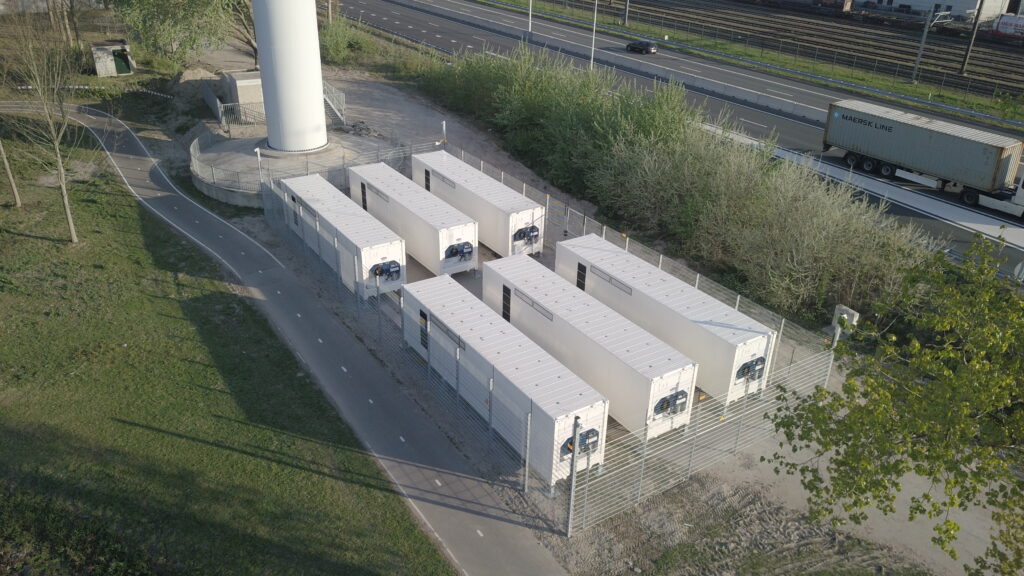
The Sequoia project involves a large-scale battery energy storage system of approximately 200 MW / 800 MWh .
For the project, the environmental permits for both the energy storage system (ESS) and the cable trajectory are irrevocable. At the same time, the connection to the high-voltage grid is currently being constructed by TenneT.
The battery will be deployed flexibly to support the electricity grid by:
- Making capacity available during times of scarcity
- Reducing peak load on the grid
- Utilizing transport capacity more efficiently
Sequoia will therefore make a direct contribution to creating additional capacity on an already congested electricity grid.
From system challenge to practical implementation
The Netherlands is facing a major challenge: the rapid growth of renewable energy is putting increasing pressure on the electricity grid. While grid expansion remains essential, additional solutions are needed to unlock capacity in the short term.
The CSC contract stipulates how flexibility from large-scale battery storage is actively deployed to reduce congestion. Sequoia is therefore a concrete example of how market parties and grid operators jointly develop new solutions within the existing infrastructure.
Ad Verbaas, COO at Green Energy Storage (GES):
This first capacity steering contract with a congestion reliever marks an important step in the development of a flexible energy system. With Sequoia, we demonstrate how large-scale battery storage can already make a concrete contribution to alleviating grid congestion today.
Maarten Abbenhuis, COO at TenneT:
“Large-scale batteries are becoming increasingly important in the energy system. They enable better integration of renewable energy sources and help stabilise the grid. By deploying them intelligently, as agreed with GES, we can use the electricity grid more efficiently and connect more customers.”
A step towards a more flexible energy system
The Sequoia Project and the CSC Contract underscore that solving grid congestion .This calls for a combination of grid expansion and the smart deployment of flexibility.
Through this collaboration, GES and TenneT take a next step towards an energy system in which energy storage plays a structural role in balancing supply and demand.
About Green Energy Storage (GES)
Green Energy Storage develops, realizes and operates large-scale battery energy storage projects in the Netherlands. The company focuses on strengthening the energy system by adding flexibility where the grid needs it most.
About TenneT
TenneT is the transmission system operator for the high-voltage grid in the Netherlands and a key player in the energy transition. The company is committed to a reliable, affordable and sustainable energy system for the future.
* Photo: Ad Verbaas, COO at GES, and Emma van der Veen, Head ai Balancing and Ancillary Services at TenneT.
Related articles